Review--the Girl With All the Gifts
 If you’ve watched enough films, read enough books, or played enough of the games, you know that “the apocalypse” is a very loaded word.
In Robert R McCammon’s most excellent novel Swan Song, the apocalypse ushers in a second stage for humanity and a massive war for humanity’s remaining soul. In Stephen King’s “The Stand,” a small portion of the human population survives the super-flu known as “Captain Trips” and does their best to find their way in the new world while an ancient evil attempts to defeat them. Jake Bible’s Z-Burbia takes a both humorous and horrific take on the traditional zombie apocalypse story by setting it in a neighborhood that still has a functional Home owner’s association.
Films such as 28 Days Later, Resident Evil, Ponty Pool, and many many more use so-called “fast zombies” which are actually infected humans. Once infected, they lose their sense of humanity and essentially return to the most base form of life. One that only wants to eat and is essentially a cannibal or homicidal killing machine.
The video game industry is rife with apocalypse games that drop the players in the midst of a setting where all infrastructure has failed and humans are fighting it out just to stay alive. They also have plenty of infection style apocalypse stories (Dead Island comes to mind)
So when you say “apocalypse,” just what are you talking about? What does it mean? Apocalypse implies that the status-quo of the human condition has radically changed. It can mean the human race has been annihilated or has been forced to evolve socially or physically. It can also mean that the word “society” has disappeared, replaced instead with tribes, gangs, or cults.
As I said, apocalypse is a loaded word. To some, it has religious connotations or points to “the end of the world.” But as REM said, it’s really the end of the world as we know it. Not sure which started the term, the song or someone addicted to acronyms, but TEOTWAKI (which stands for The End Of The World As We Know It) is actually in our global lexicon. Strangely enough, it has also become its own genre.
In my experience, nearly all TEOTWAKI stories focus on the survivors, their trials and tribulations, their conflicts with other human beings as well as whatever caused the human race to nearly go extinct or the event that threatens to. The zombies or infected don’t speak, don’t think, have no higher intelligence functions. They are essentially walking corpses that are still hungry, even if they’re still technically alive.
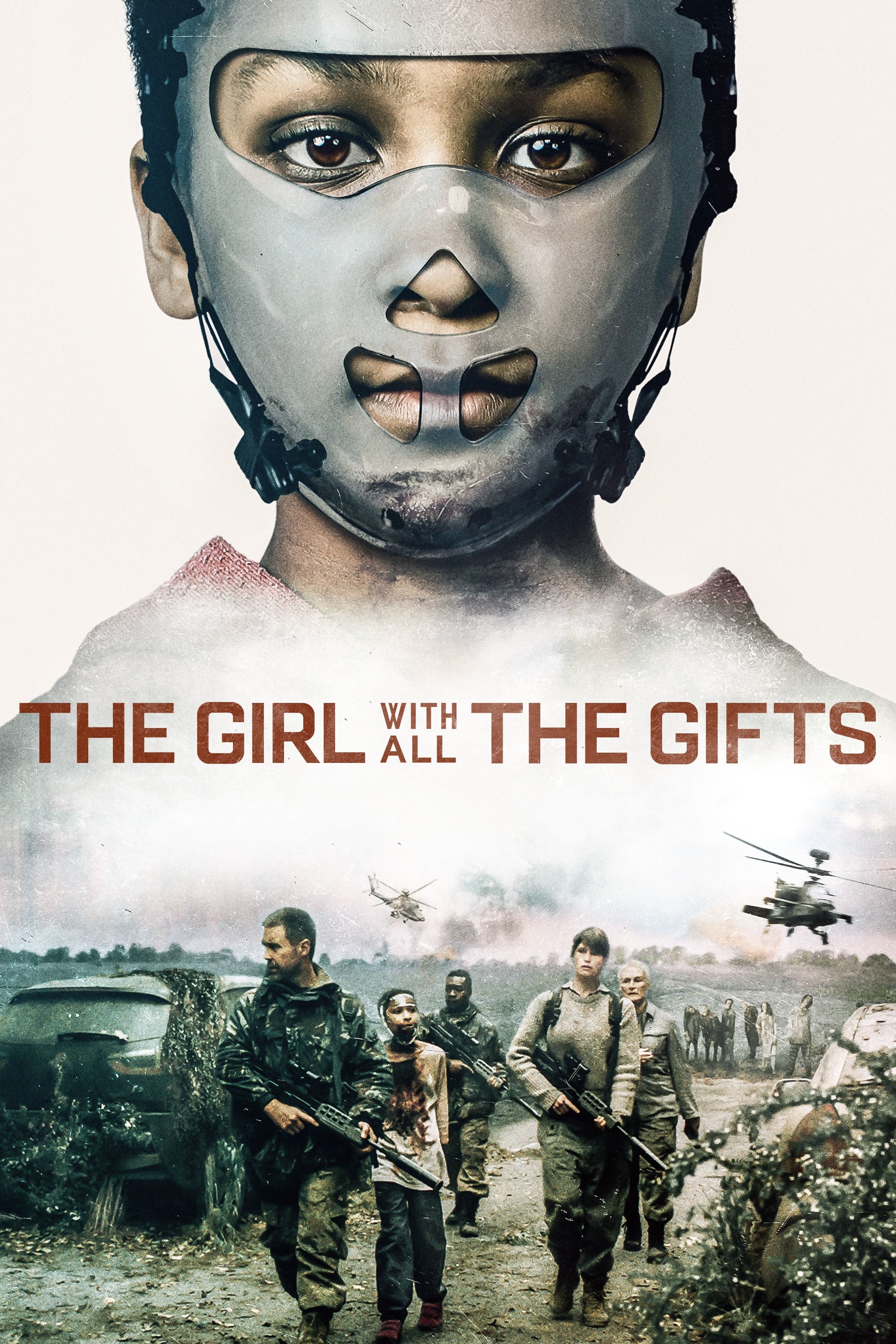
Few stories instead have “the infected” talking, thinking, rationalizing, and capable of higher thought. In fact, I can’t really think of one. Unless, of course, you include The Girl With All The Gifts.
I haven’t read the books (yes, there are two), but they’re on my wishlist, so to speak. The movie, however, is absolutely brilliant and it is, and isn’t, exactly what you think it is. In the film and the book, we meet a child named Melanie. She is obviously in some sort of prison or testing facility. Her “custodians” are cruel and cutting and treat her like an animal. Except for her teacher.
As this strange situation unfolds, we slowly begin to understand that Melanie is not what she appears to be. In many ways, the story is really about her mind, how she thinks, and what she’s becoming. And what is she becoming? Good question.
The story really does put into question what it means to be human and it what it means not to be. Think about it. What if tomorrow our world suddenly became divided into two groups: the infected, and the not. What if while those who are not infected are struggling to stay alive, the infected actually represent a new evolutionary stage of humanity? Perhaps giving birth to something that is not altogether biologically human, but still capable of displaying human traits. Not just acting them out, or mimicking, but actually thinking, learning, hell even reading.
Imagine what we might look like ten thousand years from now. Would the humans of today even recognize us as being their progenitors? Or would be considered primitive, an evolutionary dead end?
While watching the film, all these questions rolled around in my skull. Shit, they still are. Perhaps one of the reasons these stories resonate with us is because we actually are afraid of one another at an instinctual level. Those outside our tribe, whatever that may mean, are immediately clouded in suspicion, and considered a threat. That feeling may quickly pass, but it’s still there and it’s yet another surviving trait of our ancestry.
Humans are social animals. Wouldn’t it make sense that the first, and possibly many, evolutionary offshoots would be as well? Not simple herd or flock mentality, but an actual analog to our social constructs? What would it look like? Would we recognize it as such?
TEOTWAKI is a varied genre. It includes everything from Godzilla style stories to a simple flu virus mutating and killing 99% of the population. Some tales even include scenes of still working electricity, medical research, and the like while the majority are limited to camp fires and scavenging.
The Girl With All The Gifts is a very unique take on the “infection” subgenre of TEOTWAKI. I know that I was a little fooled at the beginning by where the story was going at first, but I also knew nothing about the film. Every time I thought I knew exactly where we were headed, the tale shifted and moved in a different direction.
The ending? Well, it’s this uncanny mix of hope and hopelessness. Perhaps it’s the heavy, black, sack-cloth curtain dropping on our species while the curtain rises on the show next door. In many ways, the story is unique. I hadn’t expected it to be such a memorable journey nor for it to be something I would enjoy.
The Girl With All the Gifts is streaming now on Amazon. You should go check it out.
Become a patron and get access to published and unpublished books voiced by the author!