Lessons From Garaaga
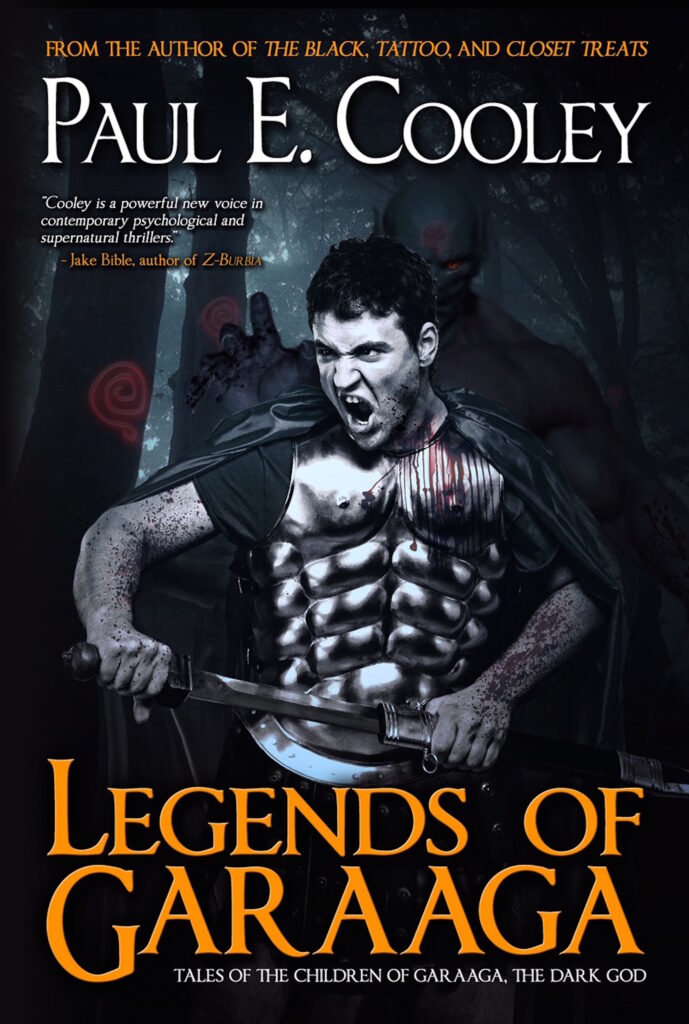
Most of my readers know nothing of Garaaga’s Children. They weren’t around to experience the tales, catch on to the mythology, or my excitement for the series. It makes me a little sad, but it is what it is. Perhaps I should have started with my original plan and moved backward as it progressed. Wait. That sounded confusing. Let me back up.
When I first began writing again, I was walking my late Indie fiend and listening to a story on Pseudopod. The story was boring the shit out of me, and I wasn’t at all interested. So in between bits of meaningless dialogue, my brain was working overtime.
A voice said in my mind, “Would you like to know about your father, little one?” It was a calm, loving voice, but it gave me a shiver. I waited for it to speak again, and it did. I listened.
I wrote the first Garaaga’s Children tale, “The Things I Do For Love,” as soon as I returned from the walk. It seeped out of my fingers like a tidal wave, the text flowing across my laptop’s screen. And when it was done, I went to bed wondering what the hell it was I had just written.
This line that came out of nowhere is what started the entire mythos in my mind: “Ah, the things I do for love. And for Garaaga.”
WTF is Garaaga? That was the question, wasn’t it? The main character in the story, a French ex-pat named “Colette,” knew who Garaaga was. It was her real father, her child’s real father. The sire from another dimension, hell, or perhaps a place we can’t begin to understand. Colette knew what It was and she loved It. I wanted to know more.
This is why I try not to answer the infamous author question “where do your ideas come from?” I sound like a schizophrenic. Or that I’m making this up for dramatic effect. If only.
Those who listened to the disastrous performance of the first tale were in loathe and in love. In loathe with me because I punished their ears for 25 minutes with my awful parody of a female voice, and in love because the story creeped them the fuck out. And they wanted more.
And I wanted to write more. And I did. I wrote a story called “Worship,” which has never been performed. I wrote a story called “Marker” some years later that is told by Nigel from my novella “Tattoo.” The lines began to blur between my series. Colette was originally supposed to be in the Fiends’ series. Instead? She now had her own: Garaaga’s Children.
I realized something while trying to write a few more stories using the same conceit: I needed to know what this Garaaga thing was and how it affected human history. I had an idea It had been with us as long as we’d been a society. Hell, perhaps even before that.
The first tale in what I call “Garaaga’s Children: Ancients” was “The Last Hunter.” In the Legends of Garaaga collection, the story has been rebranded to “Hunters.” When I first performed it, it grabbed a whole new audience for me. It was historical fantasy, of a sort, going back to the times when humans still lived in villages, were still afraid of the dark, and lived off the land without the safe confines provided by city walls and city guards. I went way the fuck back. Before the Sumerians even existed. And that’s where I planted the flag.
I had a beginning. The rest of the stories flowed out in fits and starts, but forever forward. Before I knew it, Garaaga’s Children grew into over 180k words of short stories, novelettes, and novellas.
The amusing part of all of this is that we actually discover very little about Garaaga itself. Instead, we get to follow along the trail of humans that have discovered It and want to stop it. In addition, we see the relationship Garaaga’s nephilim have with their creator. It’s not necessarily a happy one either. But that is another part of the mythos. And also another example of “everyone’s the hero of their own story.”
I wove as much historical fact into these tales as I could. It satisfied both my love of history and a chance to work within the confines of the first major societies on our planet. Sumer. Akkad. Babylon. Elam. I was in ecstasy for having found a way to combine my passions for history, suspense, and horror all into one. All while creating my own mythology, something I swore I’d never do.
There are many among my listeners and readers who love the series. They want more. I frequently get asked when the next book in the series is coming out. It makes me smile, in a sad way.
While I’m happy folks enjoyed the stories, and trust me, some of them don’t read anything else that I write, there are some realities that have kept the series from becoming an ongoing work. Mainly, the lack of sales.
I have several opportunities to reboot the series, in a fashion, by writing modern Garaaga tales. It’s possible that stories like “Worship,” “The Things I Do For Love,” and “Marker” would bring in a new audience and result in the two published books, Legends of Garaaga and Daemons of Garaaga, finally having decent sales. But it’s a long shot. And right now, I have to stay with the sure winners.
What are the sure winners? Glad you asked. The easy answer is monster books. Stories like The Black, the Derelict Saga, and Signal Decay (still not finished, by the way), are the bread and butter at the moment. I can sell them to publishers, pocket the minuscule advances, and make out like a bandit on the audio rights and ebook royalties. It’s cash, folks. And right now, that’s the name of the game.
Along the lines of “sure thing,” I could do several things to turn GC into a commercially viable urban fantasy series. It wouldn’t be difficult. I already have the series protagonist/antagonist and antagonist/protagonist figured out. The wording of that sentence was a bit strange, so let me try again.
Just as I told a series of stories from the human point of view and then from the nephilim point of view, modern Garaaga tales would need the same treatment. A human protagonist will always be the antagonist for the daemons and vice versa. Not sure there are many series that do that right now, but it would be fun.
I have a slew of stories outlined, both historical and modern, to explain the mythos, the relationship with Garaaga, and the continual battle through history of the two sides. I think they will be awesome, if I’m talented enough to do them justice. Which I guess is what scares me a bit.
All that aside, it’s a huge risk for me. If I spend the next year, 2018 that is, working on Garaaga, I won’t be working on anything else that’s a sure bet. And these stories require my undivided attention to be successful.
Couple that with the fact I’m now known as a horror/suspense/techno-thriller writer, and the problems pile up quickly. Getting an established audience to follow you into what they see as a “new genre” for you can be difficult. Many will not take the trip, as is borne out by my book sales. Hell, Closet Treats sells fewer than two dozen copies a year. Legends and Daemons? Pretty close to the same. And that’s ebook sales, folks. I don’t even want to talk about the trade paperback and audiobook sales.
I put a lot of money into Garaaga. I was certain it was going to be a hit. I even published a collector’s edition hardcover with an historical timeline, essays about the settings for each of the tales, and all sorts of extras. Result? Well, I still have 160 hardcovers of the original 250-copy printing sitting in boxes. I’ll probably never get rid of them.
Do I want to write more Garaaga? You bet. Am I willing to risk my monetary career for it? Not at the moment. Or rather not until I finish my two big moneymakers: Derelict and The Black. After that? Who knows?
Until “The Black,” I struggled to write so-called commercial fiction. Commercial fiction typically means removing my favorite conceits, which are telling stories with interesting characters that may or may not be novel-length and a series that does not have any repeating characters. Garaaga is the most obvious example. If I tried to do with the Black what I did with Garaaga, it never would have sold, and many of you wouldn’t even know who the fuck I am.
Can I swallow my pride and tell Garaaga in a way that is commercial? Probably. Do I want to? Ah, that’s the question. The answer is yes and no. My love for the series is partially encapsulated in this statement: Garaaga is my Dark Tower. It is a long sprawling epic that spans millennia, cultures, religions, and social change. But it still won’t have the repeating characters that a modern series seems to need. It can’t. It won’t. Humans age and die. The nephilim destroy themselves through pride, boredom, entitlement, or by being discovered. It’s difficult to tell these tales without the standard series treatments. But I have ideas on how to make that happen. I just need time and the opportunity to kick back and create.
So for now, Garaaga must sit. The outlines must gather digital dust. The characters are still alive in my head, waiting for the chance to take the stage. They’re still talking and I’m still listening. And someday, hopefully soon, I’ll once again give them voice.
Become a patron and get access to published and unpublished books voiced by the author!